The spine is the central support structure of our body. It keeps us upright, bears weight and protects the nerves. It also allows us to bend forwards, straighten up, bend sideways and rotate our trunk. All these movements require the vertebrae, discs, joints, ligaments and muscles to work together.
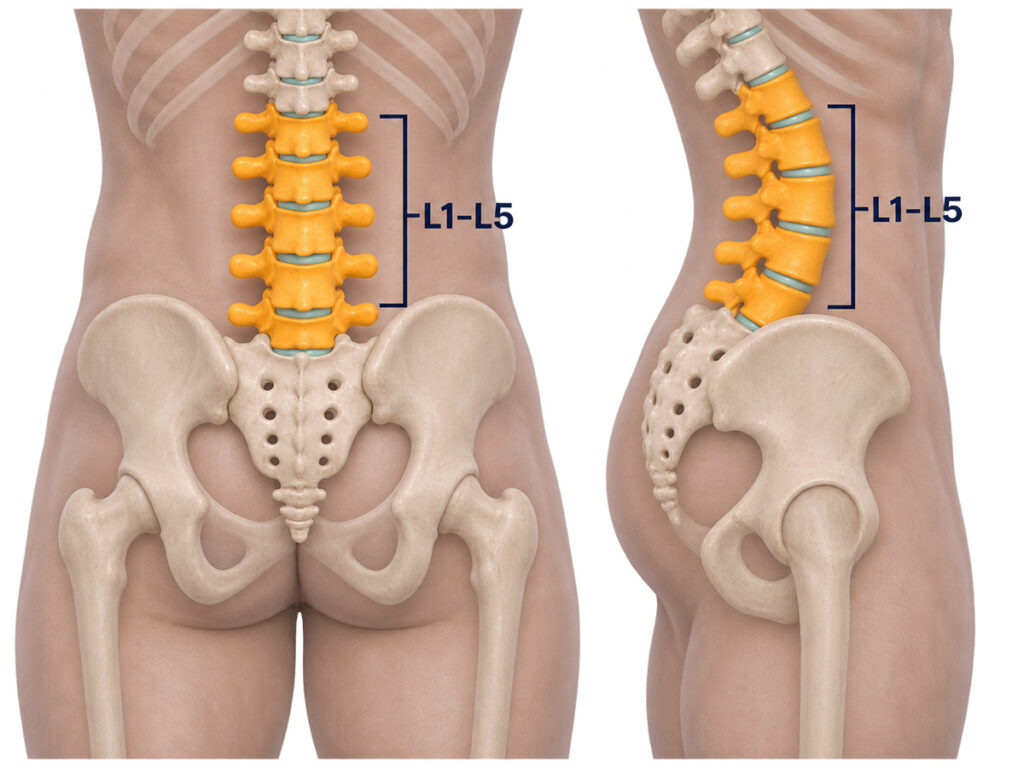
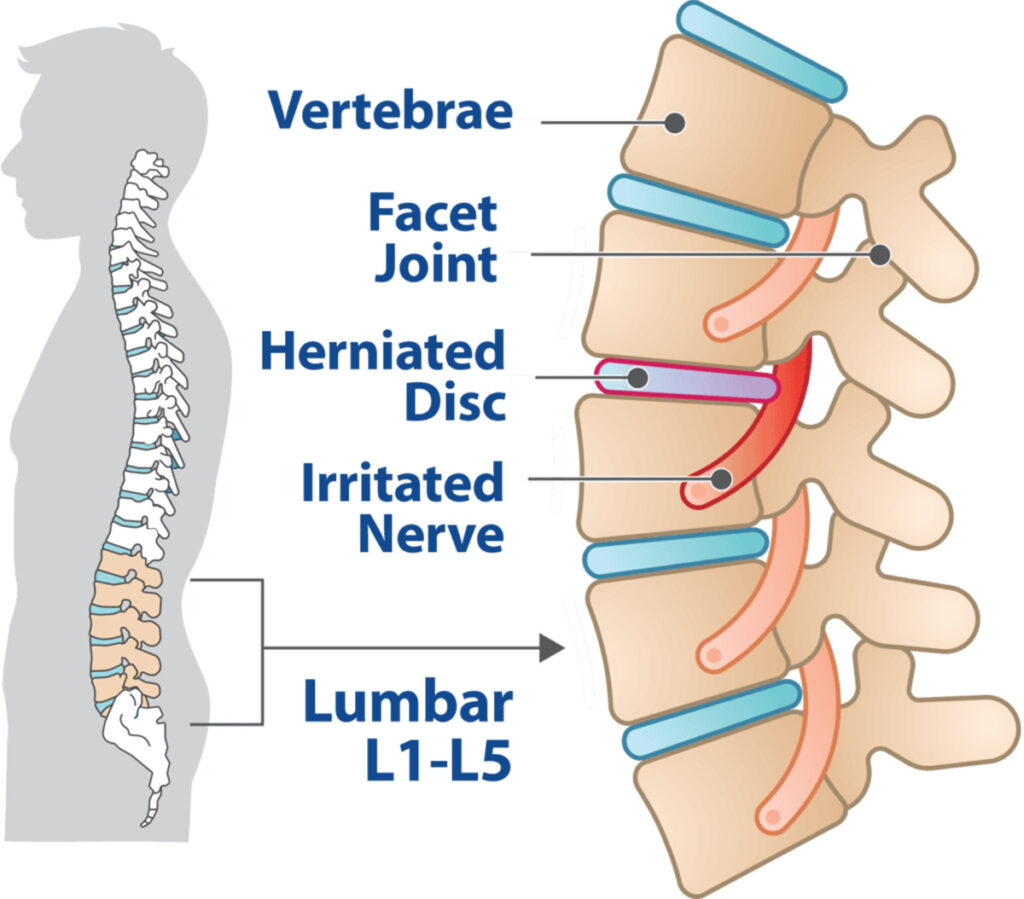
The lumbar region contains five vertebrae that bear much of the weight of the upper body. The intervertebral discs help distribute this load, while the muscles and small joints provide stability and mobility. Nerve roots emerge from the spinal canal, some of which control movement and provide sensation in the legs.
We rarely think about how this system works until pain develops. Then even simple activities, such as getting out of bed, putting on shoes or getting into a car, can become difficult. We often hear terms such as lumbago, lumbosacral syndrome or sciatica, but what do they actually mean?
Lumbago – pain and stiffness in the lower back
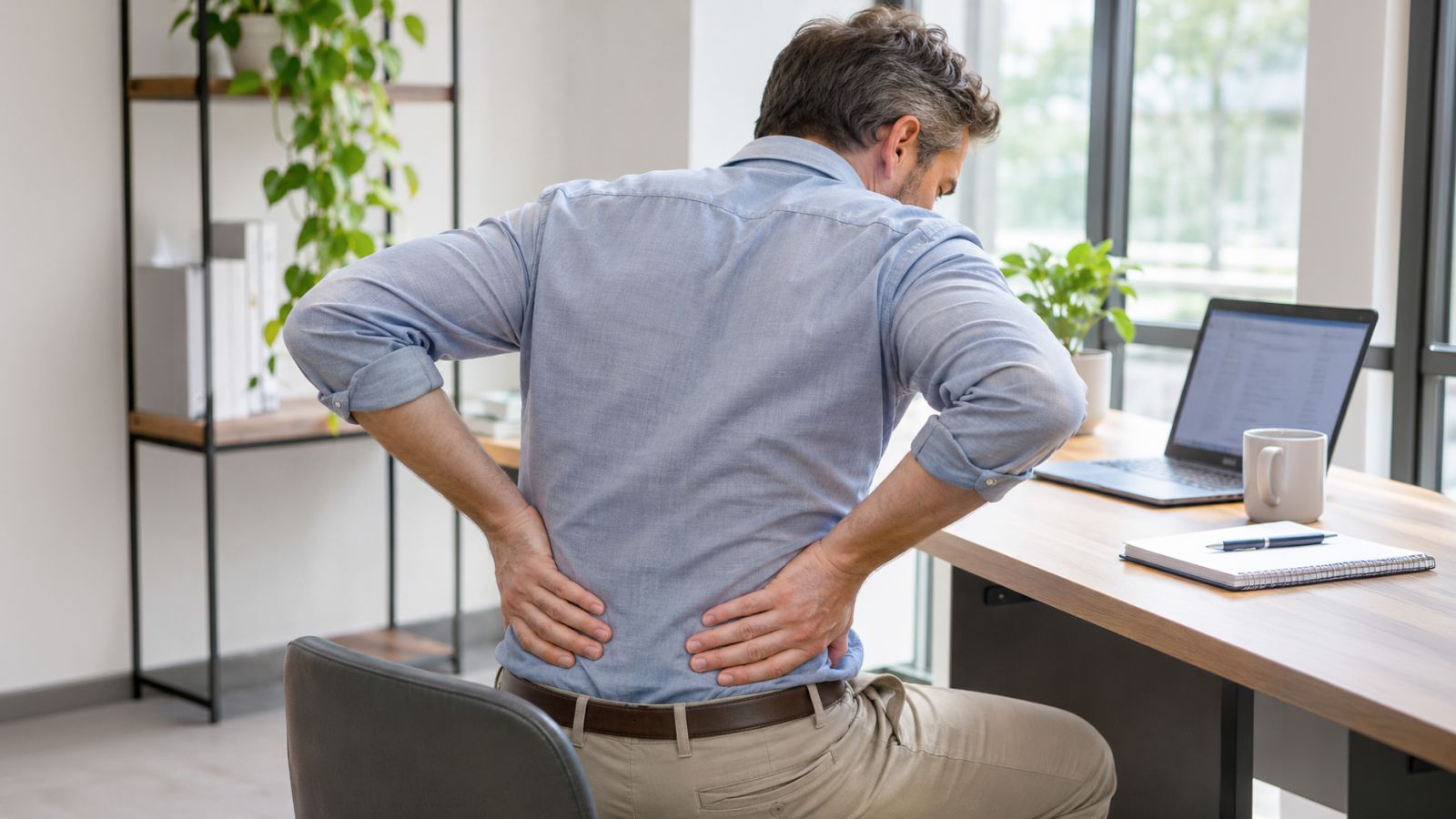
With lumbago the pain is mainly in the lower back. It often starts suddenly, for example when bending forwards, lifting something or standing up.
Typical symptoms include:
- lower back pain, which may feel sharp or stabbing;
- tense muscles and a feeling of stiffness;
- difficulty bending, turning or straightening up.
People often say: „I felt a sudden sharp pain in my back and I cannot straighten up.” Tingling, numbness and weakness in the leg are not typical of lumbago alone.
Sciatica – pain that travels down the leg
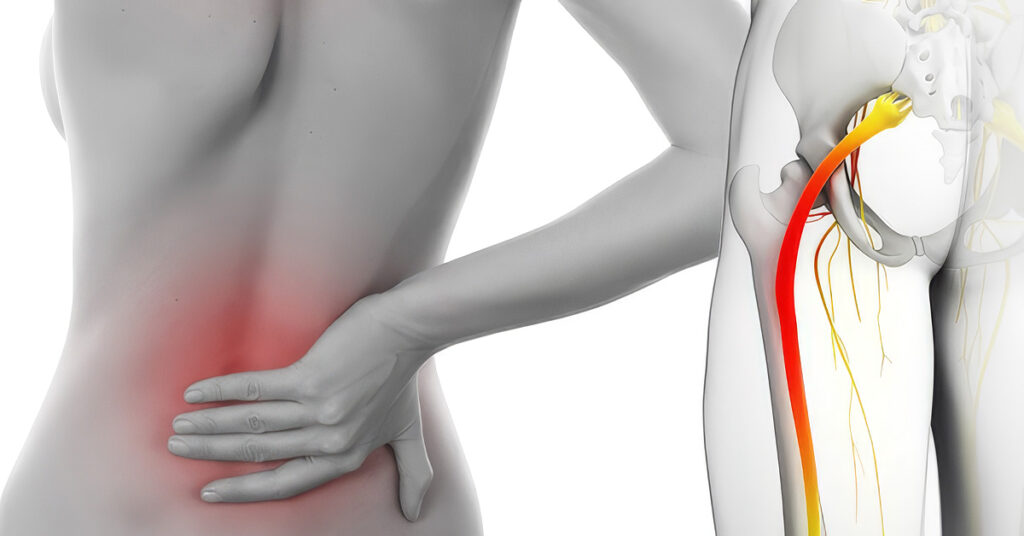
With sciatica pain travels down the leg due to irritation of a nerve root, usually on one side. It may pass through the buttock and extend below the knee, all the way to the foot or toes.
Typical symptoms include:
- sharp or burning pain down the leg, sometimes feeling like an electric shock;
- possible tingling or numbness in part of the leg or foot;
- sometimes weakness in the leg or foot, which should be assessed by a doctor.
People often say: „The pain travels down my leg.” The back may also hurt, but the pain in the leg can be more pronounced.
The easiest way to remember the difference: lumbago mainly affects the lower back, while sciatica travels down the leg.
Both conditions can occur at the same time, in which case this is known as lumboischialgia. However, not all leg pain is sciatica, an examination is important to tell the difference.
Lumbosacral syndrome (Sy LS)
This is a broader term for pain, stiffness and reduced mobility in the lumbar-sacral region, or lower back. We determine the exact cause and nerve involvement through examination and diagnostic assessment. When we see this diagnosis, we should understand that it describes a group of symptoms,which have not been precisely defined, summarised by a single abbreviation.
Why does pain develop?
In most cases of lower back pain it is not possible to reliably identify a single structure as the sole source of pain. This is referred to as nonspecific lower back pain. The pain is real, even though no clear specific cause has been identified such as a fracture, infection or another condition requiring targeted treatment.
What can influence your symptoms?
The onset and duration of pain may be influenced by:
- Physical demands – the demands of work and everyday activities.
- General health – other medical conditions and overall physical capacity.
- Stress and fear of movement – these can affect how pain is experienced and the return to activities.
Which changes in the spine may be associated with pain?
Over time the discs, cartilage and small joints of the spine change. Degenerative changes are common with ageing and do not necessarily cause symptoms.
When associated with symptoms, these changes may include:
A bulging or herniated disc – if disc tissue irritates or presses on a nerve root, pain down the leg, tingling, numbness or weakness may develop.
Changes in the small joints, or facet joints – may contribute to localised back pain and stiffness.
Spinal stenosis – narrowing of the spaces for nerves, which may result from changes in the discs, joints and ligaments.
Spondylolisthesis – displacement of one vertebra in relation to the adjacent vertebra, which may be associated with pain or pressure on nerves.
A change in the spine does not automatically mean pain or inevitable deterioration. Its significance is assessed in relation to your symptoms and examination findings.
Do you need an MRI straight away?
Imaging is not necessary for every episode of lower back pain. An MRI or other investigations may be considered when a more serious cause is suspected or when the findings could change treatment.
Degenerative changes and disc bulges are also common in people without pain. Terms such as „degeneration” or „protrusion” on a scan report therefore do not explain all symptoms on their own. Imaging is one part of the assessment and should be considered alongside what you feel and what is found during the examination.
How can you help yourself before seeing a physiotherapist?
If none of the warning symptoms listed below are present, the aim is to ease your symptoms and maintain a manageable level of activity.
Move little and often
Short walks and simple everyday activities are usually a better choice than prolonged bed rest. A brief rest may feel helpful, but try to return regularly to gentle movement.
Temporarily adjust your activity
Reduce heavy lifting and tasks that significantly worsen your symptoms. Break activities into shorter periods, with a gradual return to your usual level of activity.
Change position
Alternate between sitting, standing and walking according to what you can tolerate. Particularly with sciatica avoid sitting or lying down for long periods without a break.
Try heat if it feels helpful
A warm pack may ease stiffness and muscle tension. Wrap it in a cloth to protect your skin. If it feels uncomfortable or worsens your symptoms, stop using this method.
Do not push through exercises that worsen your symptoms
An exercise that helps one person may not suit another. If it increases your pain, stop and seek advice. Pay particular attention to any new or worsening numbness or weakness.
Discuss suitable pain relief with a doctor or pharmacist, especially if you have other medical conditions or take medication.
Arrange an assessment if pain limits your everyday activities, gets worse or does not improve within a few weeks.
When should you seek help immediately?
Most lower back pain is not associated with a serious illness. However, certain symptoms require prompt action.
Seek emergency medical help immediately if your pain is accompanied by:
- an inability to pass urine or loss of bladder or bowel control
- new numbness between your legs, around your genitals or around your anus
- severe or worsening weakness or numbness in both legs, or new sciatica affecting both sides
- new marked weakness in the leg or foot, for example when the foot starts to „drop”, such symptoms may indicate a serious problem affecting nerve function.
- An urgent assessment is also needed after a serious injury or road traffic accident.
Seek medical advice on the same day if the pain is accompanied by fever, chills or feeling generally unwell, or if the pain is sudden, very severe or getting worse quickly.
How can physiotherapy help you?
We tailor treatment to your symptoms, abilities and goals.
We can help through:
- Assessing your symptoms – we check where it hurts, whether symptoms travel into the leg and assess mobility, strength and function. Where appropriate we also check for signs of nerve involvement.
- Understanding your pain – we explain the findings and how to adapt everyday activities without unnecessarily avoiding movement.
- Easing pain and stiffness – through tailored exercises and, where appropriate, manual therapy.
- Improving strength and mobility – we start at a level you can tolerate and gradually increase the demands according to your response.
- Returning to everyday activities – we work towards practical goals, such as getting up more easily, walking for longer, lifting your child or returning to work and recreational activities.
- Maintaining progress after recovery – we agree on a plan for independent exercise and regular movement that may help reduce the risk of symptoms returning.
At Physiotherapie im Rike-Hus in Effretikon and Winterthur we adapt your treatment plan to your everyday life. If lower back pain is limiting your daily activities, contact us for an assessment.