EFFRETIKON & WINTERTHUR

Ultrasound & Deep Oscillation

Two non-invasive device-based treatments under one roof: ultrasound therapy with high-frequency sound waves and Deep Oscillation with an electrostatic alternating field. At Rike-Hus in Effretikon and Winterthur, our physiotherapy team uses both as complementary elements, depending on your assessment findings.

What are ultrasound & Deep Oscillation?

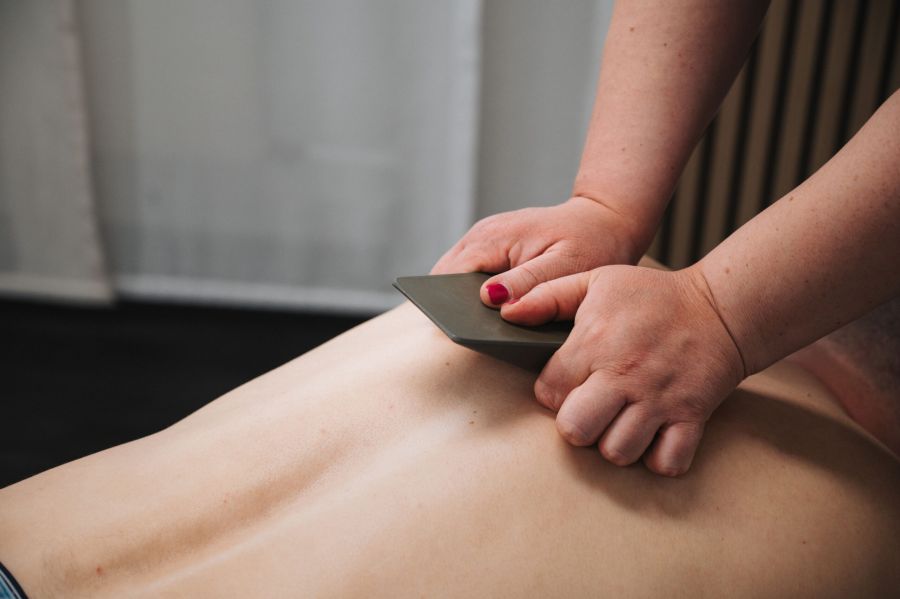
In ultrasound therapy, high-frequency sound waves are delivered into the tissue via a transducer head. The mechanical vibrations create a gentle micro-massage and local warmth in the tissue. In Deep Oscillation, an electrostatic alternating field generates a deep-acting vibration in the tissue, which may feel pleasant.

Among other things, both treatments aim to stimulate local blood circulation and influence tissue metabolism. At Rike-Hus, we use both methods as elements of a comprehensive physiotherapy concept. The evidence varies depending on the condition, and response differs from person to person; no particular treatment outcome can be guaranteed.

Benefits of ultrasound & Deep Oscillation

Non-Invasive

Both treatments are applied from outside the body, without surgery and without injections.

Assessment-Based

Frequency and intensity are adjusted to the target region identified in the assessment.

Tissue Activation

Among other things, the treatment aims to stimulate local blood circulation and tissue metabolism.

Combinable

Both combine well with manual techniques and active training therapy.

Versatile

Used both for acute functional disorders and for long-standing complaints.

Short Treatment

A short treatment time that can usually be integrated directly into a therapy session.

Our treatment approach at Rike-Hus

Every treatment is based on a thorough physiotherapy assessment. At Rike-Hus, we rarely use ultrasound and Deep Oscillation on their own, but rather as elements of an individually tailored therapy concept.

The passive treatment often serves as preparation, so that active movement exercises can follow. Combined with manual techniques and active exercises, we support the gradual building of your load capacity.

How the treatment works in 4 steps

01. Assessment & medical history

Thorough examination of the affected structures and screening for possible contraindications.

02. Selection & planning

Selection of the appropriate treatment (ultrasound or Deep Oscillation), frequency and intensity based on your assessment findings.

03. Gentle application

Application to the target region using a transducer head and contact gel, or the electrostatic alternating field, adapted to your response.

04. Active integration

Combined with active exercises as part of the load progression as therapy continues.

Which treatment is right for you?

Depending on your condition and the target region, we select the appropriate device-based treatment at Rike-Hus or combine both with active therapy.

Ultrasound for tendon and soft tissue complaints
Used as an accompanying treatment for complaints affecting muscles, tendon attachments and ligaments, for example after injuries or overuse. Response varies from person to person.
Deep Oscillation for swelling and tension
Used as an accompanying treatment for tension and in areas of swelling. Whether and to what extent complaints change cannot be predicted.
Combination with active therapy
We often combine both treatments with manual techniques and active exercises, tailored to your assessment findings.

Frequently Asked Questions (FAQ)

Are the treatments painful?
Both treatments are usually perceived as pleasant. With ultrasound, you usually only feel the transducer head and the contact gel; with Deep Oscillation, a slight vibration. Please let us know at any time during the treatment if the sensation becomes uncomfortable.
How many sessions are needed?
This depends on your individual assessment findings and is usually planned as part of a physiotherapy series. A binding prediction of the number of sessions is not possible.
How long does a treatment take?
The treatment itself usually takes between 10 and 20 minutes and is generally integrated directly into the physiotherapy session.
Are there any possible side effects?
When applied correctly, side effects are rare. The methods are not used in cases including areas of acute infection, open wounds and tumors in the treatment area, and on certain body regions during pregnancy; Deep Oscillation is also not used with pacemakers and other implanted electronic devices. We check for contraindications before the first treatment.
Are the costs covered by health insurance?
If you have a medical prescription for physiotherapy, the treatments are usually billed as part of physiotherapy through basic health insurance (KVG) or accident insurance (UVG). Your insurer can give you a binding answer on cost coverage.

More services at Rike-Hus

    Would you like to learn more?

    Let’s work together to determine whether ultrasound or Deep Oscillation is right for your situation. Book an appointment in Effretikon or Winterthur.