Headaches are among the most common health complaints. Almost everyone experiences them—ranging from a mild feeling of pressure that goes away after some rest to severe pain that can significantly interfere with daily life, work, and sleep.
According to the World Health Organization (WHO), approximately 40% of the world’s population is affected by headaches. Based on data from 2021, this corresponds to about 3.1 billion people. Headaches can occur at any age and, overall, affect women more frequently than men. This difference is particularly evident in migraines.
Even though we often simply say “I have a headache” in everyday life, not all headaches are the same. Similar symptoms can arise from different mechanisms and have various causes. That’s why it’s important to identify the type of headache and the other symptoms that accompany it.
Not All Headaches Are the Same
The International Classification of Headache Disorders (ICHD-3) distinguishes between numerous different types of headaches. They are generally classified as primary or secondary headaches.
In primary headaches, the headache itself is the disease and not the result of another underlying disease or disorder.
The most common types include:
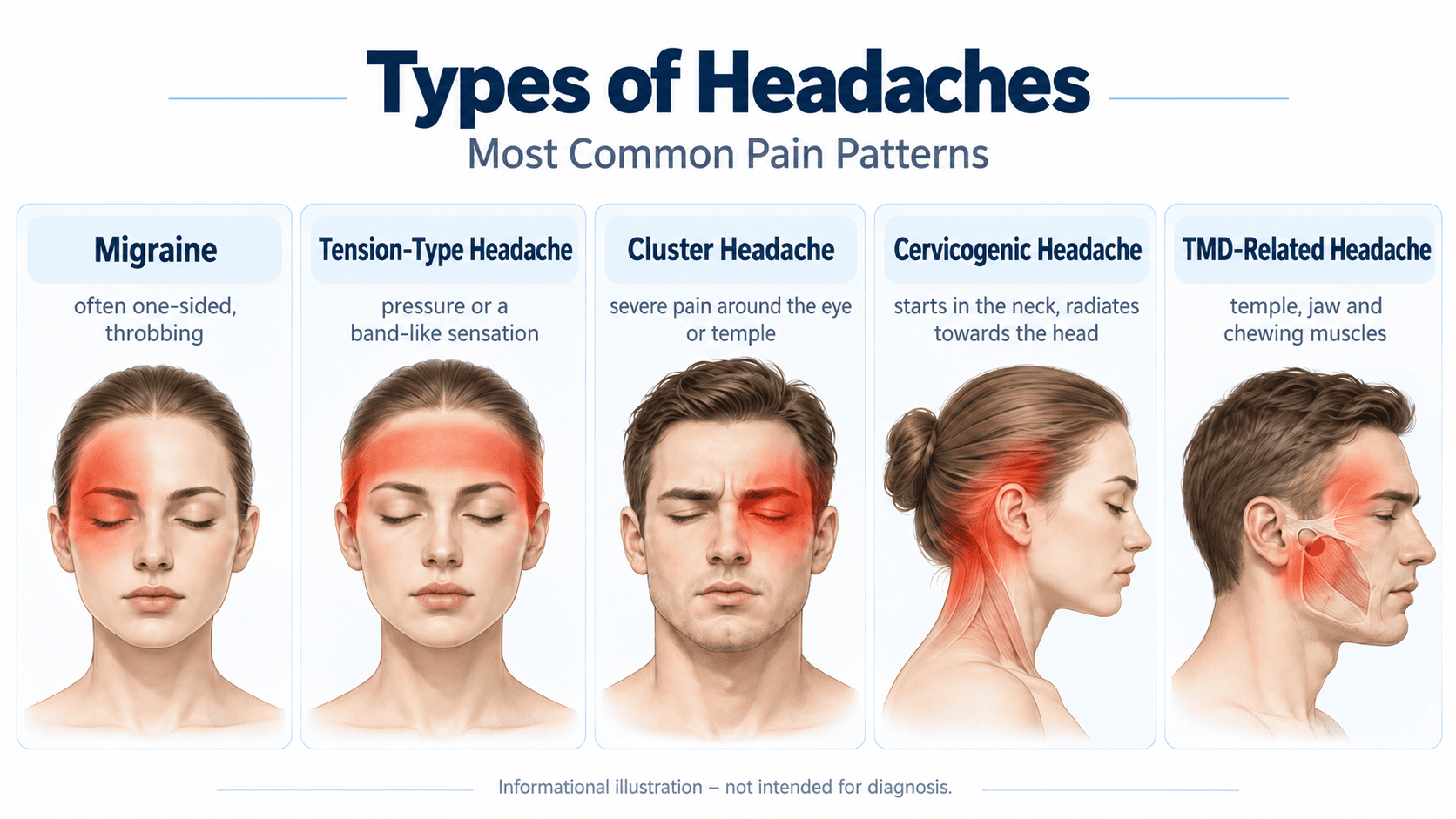
Migraine—typically occurs in attacks that can last from several hours to several days. The pain is often throbbing, moderate to severe, and may occur on one side of the head. It may be accompanied by nausea and increased sensitivity to light and sound.
Tension headaches – are often described as a pressing or constricting sensation, sometimes like a band around the head. The pain is usually mild to moderate and often occurs on both sides of the head.
Cluster headaches—are much less common but can cause extremely intense pain. They typically occur on one side, particularly around the eye or temple. Accompanying symptoms on the same side may include, for example, a watery or reddened eye, as well as discomfort in the nasal area.
Secondary headaches, on the other hand, arise as a consequence of another disease or disorder. They can have a wide variety of causes and, in certain cases, may also be related to structures in the neck, eyes, sinuses, teeth, oral cavity, or face.
From a physical therapy perspective, cervicogenic headaches—which are related to structures of the cervical spine—are particularly significant, as are headaches associated with temporomandibular dysfunction (TMD/CMD) in certain patients.
This raises an important question: Does the cause of the pain always have to be where we perceive it?
When the cause of headaches may lie outside the head
In physical therapy, we do not focus exclusively on the site where the pain is felt. Depending on the type of headache and the accompanying symptoms, it may be useful to include other structures in the examination.
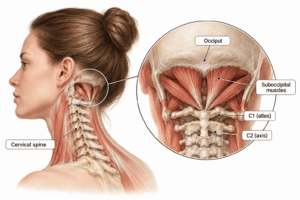
A physical therapy examination may therefore include, among other things, the cervical spine, the transition between the head and neck, the neck and shoulder girdle muscles, as well as the temporomandibular joint and the masticatory muscles.
The cervical spine
The cervical spine plays an important role, particularly when cervicogenic headaches are suspected. In this type of headache, the cause is related to structures in the cervical spine, even though the pain is felt in the head.
During the examination, the mobility of the neck, the quality of movement, and the response to specific movements and clinical tests can be assessed. Among other things, the examination determines whether the known headaches can be reproduced or altered. A possible connection between the symptoms and prolonged body postures or specific daily activities may also be relevant.
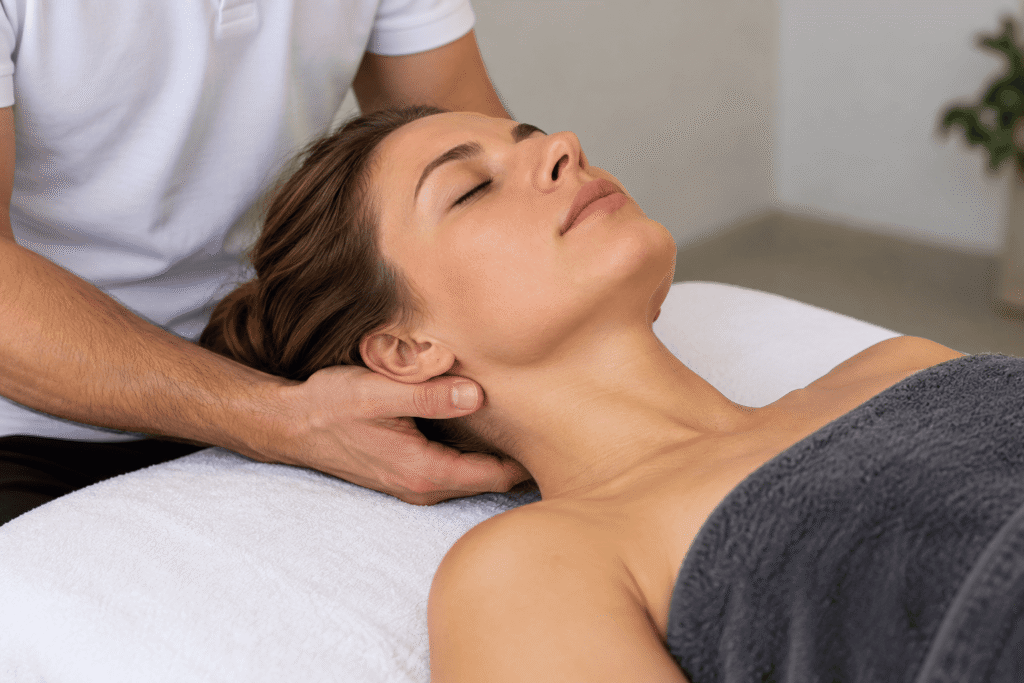
If corresponding limitations are identified, treatment goes beyond simply “loosening up the neck.” Depending on the individual findings, manual techniques may be combined with targeted exercises to improve mobility, movement control, and function of the cervical spine.
Transition Between the Head and Neck and the Suboccipital Muscles
At the junction between the head and neck lies a group of small muscles known as the suboccipital muscles. These muscles are involved in controlling head posture and head movements.
In some people with headaches, this region may be tender or tense. During the examination, it is therefore possible to assess whether pressure, palpation, or movements in this area influence or reproduce the known symptoms.
If this is clinically relevant, manual therapy techniques and targeted exercises for the cervical spine may be included in the physical therapy treatment plan.
Neck and Shoulder Girdle Muscles
The muscles in the neck and shoulder girdle region may also be tender or strained in people with headaches.
Prolonged static postures, repetitive strain, or other musculoskeletal conditions can place additional stress on these structures. For this reason, the physical therapy examination does not focus solely on individual tender points. Depending on the symptoms, muscle tenderness, range of motion, strength, endurance, and movement control may be assessed.
Depending on the individual findings, treatment may include manual or soft-tissue techniques, active exercises, and strategies for managing stress in daily life.
Temporomandibular Joint and Masticatory Muscles
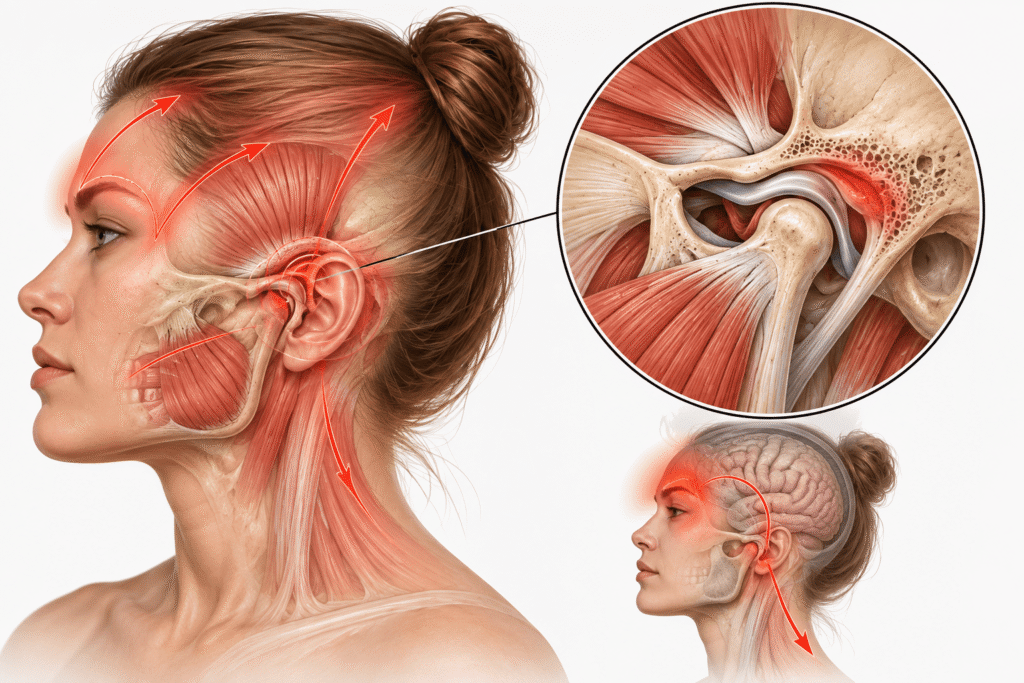
Another area that may be relevant for certain individuals with headaches is the temporomandibular joint—the connection between the lower jaw and the skull.
An examination of this region may be particularly useful if the headaches occur alongside pain or a feeling of tension in the jaw, pain in the temples, teeth clenching or grinding, discomfort when chewing, limited mouth opening, or pain and noises in the area of the temporomandibular joint.
The physical therapy examination may include an assessment of the jaw’s range of motion and movement control, as well as the masticatory muscles. The masseter and temporalis muscles are of particular relevance here. Depending on the findings, other structures of the masticatory system may also be examined.
If relevant musculoskeletal findings are identified, physical therapy may include manual techniques applied to the temporomandibular joint and surrounding soft tissues, measures to reduce muscular sensitivity, and exercises to improve jaw mobility and control.
However, it is important to note that teeth clenching, tender masticatory muscles, or a clicking sound in the temporomandibular joint do not automatically mean that the cause of the headaches has been identified. Rather, the goal of the examination is to determine whether the masticatory system is, in fact, relevant to the individual’s symptoms.
How does physical therapy for headaches proceed?
Physiotherapy treatment for headaches should not begin with a predetermined treatment technique. The process starts with a detailed medical history and an individualized clinical examination.
For one person, for example, limited mobility of the cervical spine may be a factor. For another, increased sensitivity in certain muscles or reduced motor control may be the primary concern. For some patients, the symptoms may indicate that, in addition to the neck, the masticatory system should also be examined.
Depending on the individual findings, treatment may include manual therapy, mobilization, soft tissue techniques, therapeutic exercises, movement control training, and counseling on managing stress in daily life.
The goal is not to treat as many structures around the head as possible. Rather, the examination is intended to identify those findings that may be relevant to the individual’s symptoms. Treatment is then tailored individually based on these findings.
When is physical therapy not the first step?
Not every headache has a musculoskeletal origin, and not every type of headache should primarily be treated with physical therapy.
Sudden and unusually severe headaches, newly developed or significantly changed headaches, headaches following a head injury, as well as headaches associated with symptoms such as weakness or numbness on one side of the body, speech or consciousness disturbances, high fever, and neck stiffness or other sudden-onset neurological symptoms require appropriate medical evaluation.
Even in cases of migraine and other primary headache disorders, physical therapy does not replace medical diagnosis or necessary medical treatment. At the same time, some people may have additional issues with the cervical spine or the masticatory system, which can be separately evaluated and treated through physical therapy.
When it comes to headaches, therefore, it’s not just where the pain is felt that matters. Equally important is the question of which factors may be related to the symptoms in each individual.
Do you suffer from recurring headaches?
If your headaches are accompanied by neck pain or stiffness, a feeling of tension at the junction between the head and neck, discomfort in the jaw or temple area, teeth grinding, or discomfort when moving your neck and jaw, a physical therapy evaluation can help determine whether musculoskeletal factors are related to your symptoms.
If you’re unsure whether physical therapy might be appropriate for your symptoms, please feel free to contact us. Through an individualized evaluation, we can determine whether physical therapy is indicated or whether further medical evaluation is recommended.