EFFRETIKON & WINTERTHUR

GLA:D® Program

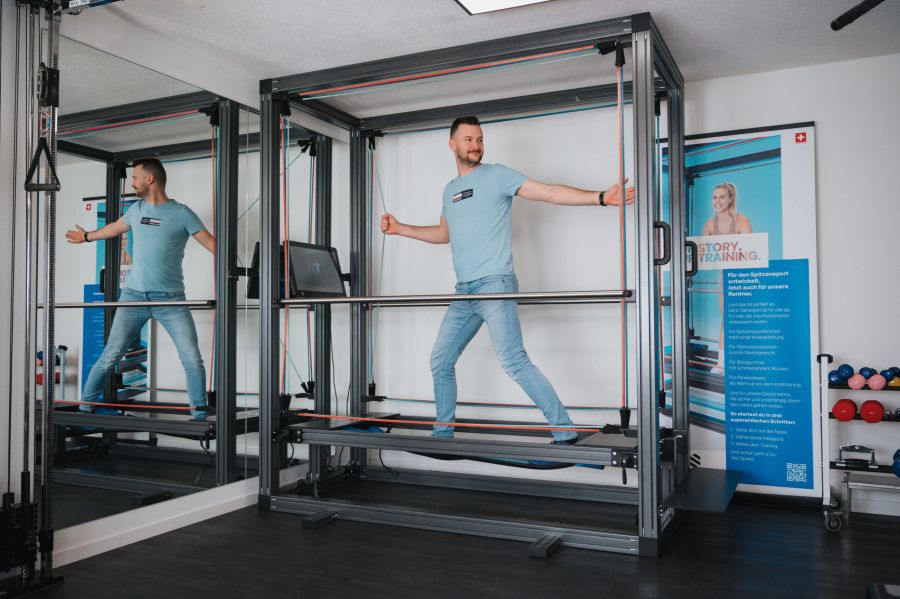
GLA:D is a structured exercise and education program for people with knee or spine complaints. At Rike-Hus in Effretikon and Winterthur, our physiotherapy team offers it as a supervised program combining education and active exercise sessions, tailored to your assessment findings.

What is the GLA:D Program?

GLA:D (Good Life with osteoArthritis in Denmark) is a structured program consisting of an education component and an exercise component. At Rike-Hus, our physiotherapy team offers it to people with complaints affecting the knee and spine. The program follows a set sequence of supervised exercise sessions, accompanied by education.

Among other things, the program aims to work on movement patterns, train muscle activation and provide knowledge on how to manage your complaints in everyday life. Standardized measurements are carried out at the start and over the course of the program. How complaints change varies from person to person and cannot be predicted; no particular treatment outcome can be guaranteed.

Key elements of the GLA:D Program

Education

An education component provides knowledge about your complaints and how to manage them in everyday life.

Supervised Exercises

Supervised exercise sessions focusing on movement control and muscle activation.

Knee

Used for complaints affecting the knee joint, tailored to your assessment findings.

Spine

Used for complaints affecting the spine, tailored to your assessment findings.

Standardized Measurements

Standardized measurements are carried out at the start and over the course of the program for documentation purposes.

Structured Sequence

A set sequence over several weeks, with exercises gradually adapted to how you respond.

Our treatment approach at Rike-Hus

At Rike-Hus, we do not use GLA:D on its own, but as part of a comprehensive physiotherapy concept. It is based on a thorough assessment, from which we decide together whether, and to what extent, the program is suitable for you.

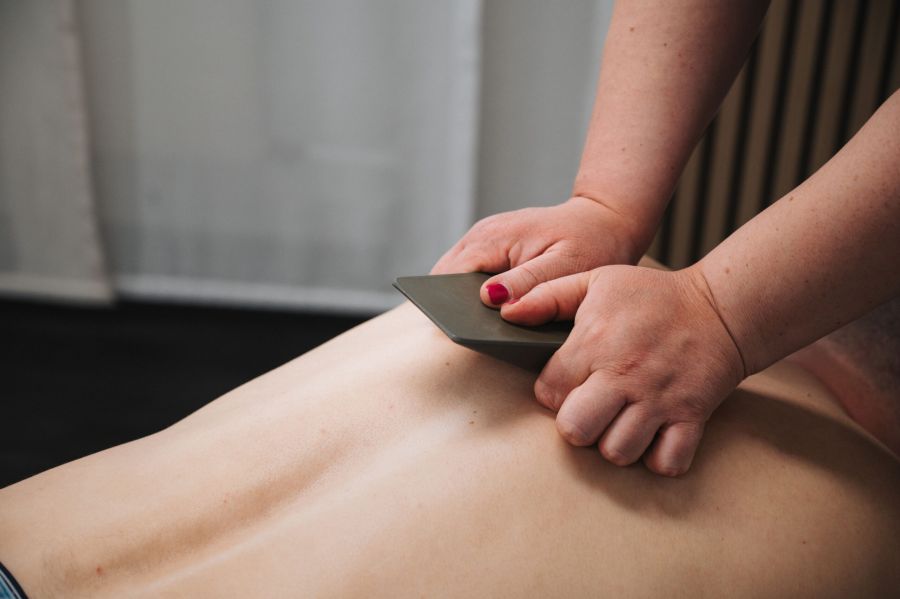
The program combines supervised exercises with education. Where needed, we add manual techniques and individual load adjustments, and support you in transferring what you have learned into everyday life.

Benefits of the GLA:D Program

Structured

A set, transparent sequence of education and supervised exercise sessions.

Assessment-Based

Exercise selection and intensity are tailored to your assessment findings.

Education

The education component provides knowledge on how to manage your complaints in everyday life.

Combinable

An active exercise approach that can be combined with other physiotherapy measures.

Documented

Standardized measurements at the start and during the program document how it progresses.

Gradual Adjustment

The exercises are gradually adapted to your response and load capacity.

Who is the GLA:D Program suitable for?

The GLA:D Program may be suitable for people with knee or spine complaints. Whether participation is appropriate is clarified during your personal assessment and—where necessary—in consultation with your treating physician.

People with knee complaints
For people with long-standing complaints affecting the knee joint. Whether and to what extent complaints change varies from person to person.
People with back complaints
For people with long-standing complaints affecting the spine who are looking for an active, supervised exercise approach.
People looking for a structured program
For people who prefer a structured program of exercise and education to individual treatment alone. Possible contraindications must be checked beforehand.

How the program works in 4 steps

01. Assessment & baseline measurement

A thorough assessment of your complaints, functional testing and screening for possible contraindications, plus a baseline measurement.

02. Education

Education sessions that provide knowledge about your complaints and how to manage them in everyday life.

03. Supervised training

Supervised exercise sessions over several weeks, gradually adapted to your response and load capacity.

04. Follow-up & independent exercises

A follow-up measurement and instruction in exercises that you continue on your own.

Frequently Asked Questions (FAQ)

Is the training strenuous or painful?
The exercises are individually adapted to your load capacity. Mild muscle soreness after a session is possible. Please let us know at any time during training if an exercise becomes uncomfortable.
How is the program structured and how long does it last?
GLA:D follows a structured sequence of education and exercise sessions over several weeks. We decide on the exact scope together, based on your assessment findings.
How long does an exercise session last?
A single exercise session usually lasts about 60 minutes and is supervised.
Is there anything I need to consider before taking part?
Possible contraindications must be checked beforehand. Whether and to what extent participation is appropriate is clarified during your personal assessment and, where necessary, in consultation with your treating physician.
Are the costs covered by health insurance?
If you have a medical prescription for physiotherapy, the sessions are usually billed as part of physiotherapy through basic health insurance (KVG) or accident insurance (UVG). The statutory rules on prescriptions and number of sessions apply, as do your deductible (franchise) and co-payment. Your insurer can give you a binding answer on cost coverage.

More services at Rike-Hus

    Would you like to learn more?

    Let’s work together to determine whether the GLA:D Program is right for your situation. Book an appointment in Effretikon or Winterthur.