What Is DNS
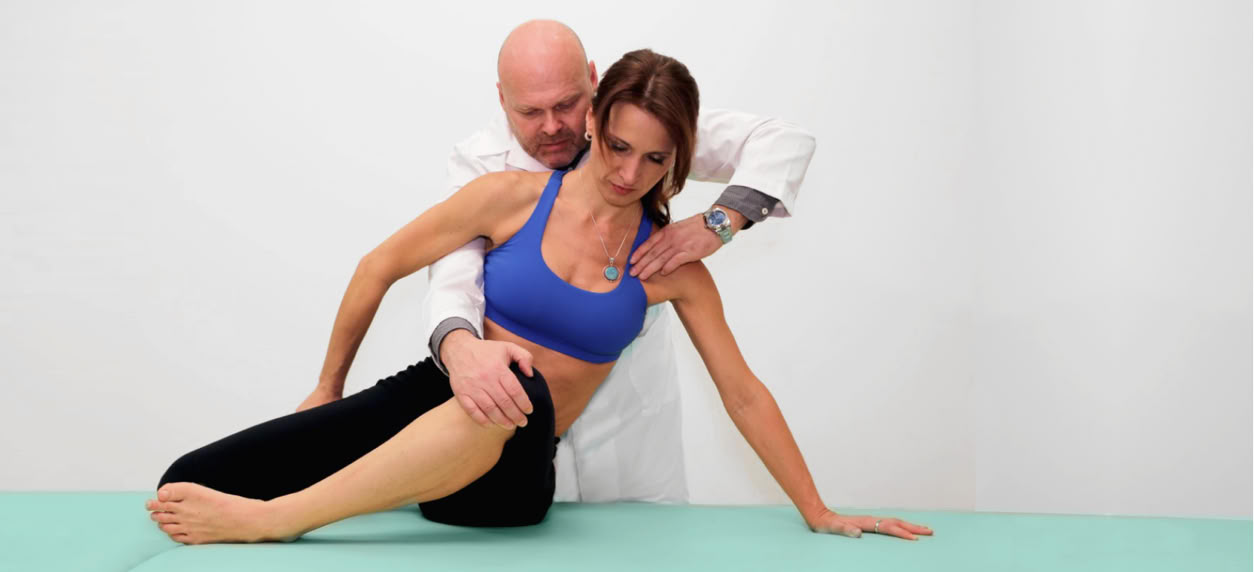
Dynamic Neuromuscular Stabilization (DNS) is a rehabilitation concept developed by the Prague School of Rehabilitation. It restores ideal posture and movement patterns based on the principles of developmental kinesiology from the first year of life.
DNS is founded on the fact that postural control and locomotion are genetically pre‑programmed, and that healthy infant movement creates central patterns upon which more complex movements are later built.
When these patterns are lost due to pain, injury, or poor habits, larger superficial muscles take over the deep stabilizers’ work, leading to compensation and the risk of overloading.
DNS specifically aims to restore joint balance and centration.
Why Breathing Is Essential
At the core of DNS is diaphragmatic breathing and regulation of intra‑abdominal pressure (IAP), creating a “cylinder” of trunk stability: the diaphragm forms the roof, the pelvic floor the base, and the abdominal and paravertebral muscles the walls.
Properly generated IAP enables simultaneous breathing and spinal stabilization — a prerequisite for smooth limb movement without compensations or strain.
In practice, assessment begins with identifying and training the correct breathing pattern and learning to maintain pressure in different developmental positions, guided by precise tactile and verbal cues.

Child Development as the Foundation
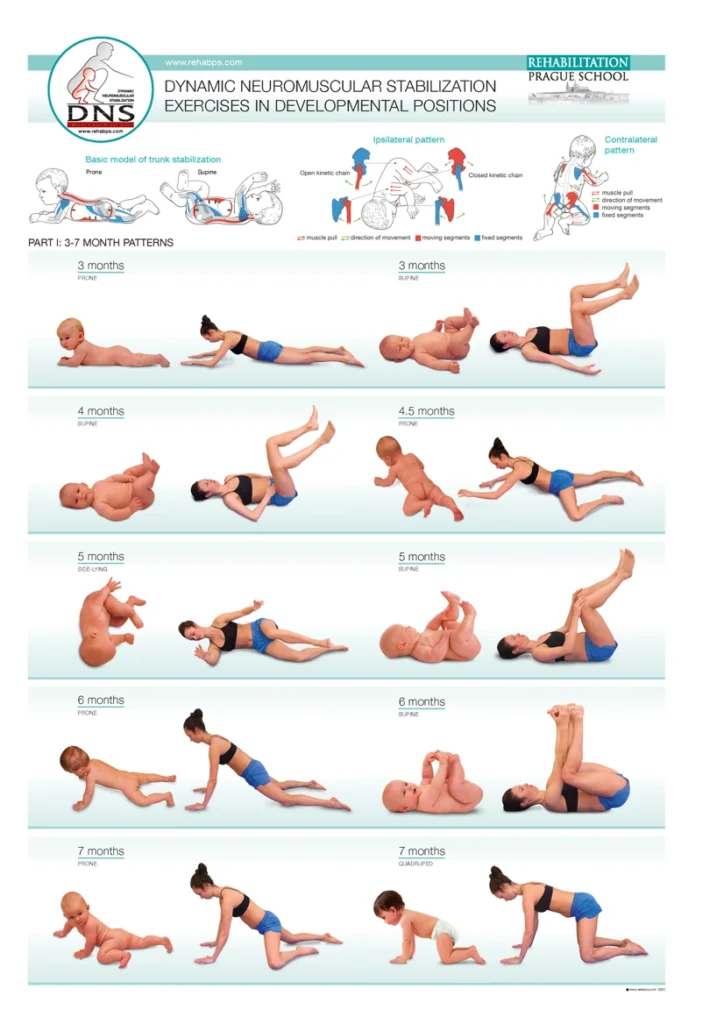
DNS directly replicates developmental positions and transitions seen in healthy infants: from the 3‑month supine and prone phases to rolling, crawling, sitting, kneeling, standing, and walking.
These patterns are genetically encoded within central nervous system maturation. Their reactivation stimulates automatic, global postural stabilization in adults.
DNS assessment and diagnosis compare your postural‑stabilization strategy with typical infant patterns. Interventions are individually tailored, focusing on movement quality and joint centration.
Benefits of DNS Exercises
- Improved postural control, joint centration, and balanced load distribution reduce stress on ligaments and superficial muscles, making walking, lifting, and sitting easier.
- More efficient trunk stabilization through precise intra‑abdominal pressure control and calm, functional breathing enhances safety and economy of movement in daily tasks such as squatting, bending, and carrying.
- Prevention of recurrent issues (low back pain, neck pain, shoulder pain) and improved performance by retraining central movement patterns instead of isolated muscles, resulting in lasting motor changes.
- Reduction of compensations and muscle tension through learning optimal dynamic postural strategies, relieving joint strain and promoting lightness of movement.
- Integration of breathing, trunk, and pelvis (diaphragm–TA–pelvic floor) along with better limb coordination improves stability and control in all postures — from lifting off the floor to climbing stairs.
- Increased proprioception and body awareness enable quick detection of “faulty” patterns and timely posture correction, minimizing overload throughout the day.
- Structured rehabilitation and a safer return to activity after injury through gradual reactivation of developmental patterns (lying–rolling–crawling–sitting–standing), with focus on movement control and quality.
- Holistic effect on the entire kinetic chain — harmonizing the musculoskeletal, neurological, and respiratory systems improves force transmission, balance, and movement efficiency across tasks.
- Potential stress reduction and better nervous system regulation through diaphragmatic breathing and stabilization, supporting greater resilience in daily demands.
Who It Is For
DNS can be adapted for children, adults, athletes, older adults, and people with chronic conditions, with individualized intensity and professional supervision. In neurological or more complex cases, a specific therapeutic plan and caregiver education are required, prioritizing pattern quality and safety.
For most individuals, DNS is a safe and beneficial approach, beginning from easier developmental positions and progressing toward functional tasks without forcing movement.
Conditions It Helps With
- Spinal problems:
- Disc herniation (protrusion, extrusion, sequestration) with or without radiating pain. Exercises teach proper diaphragmatic breathing and trunk stabilization to reduce pressure on discs and nerves.
- Mechanical low back and neck pain often due to weak central stability. DNS restores proper breathing and movement patterns to ease tension and pain.
- Mild degenerative changes (early spondylolisthesis or joint wear). Training focuses on safe movement and trunk‑pelvis stability.
- Scoliosis and posture issues through learning symmetrical activation and better postural control via developmental positions.
- Other indications:
- Rehabilitation after spinal surgery (stable phase), with gradual reintroduction of proper breathing and stabilization.
- Painful shoulders and hips (tendinopathies, impingements) by improving trunk control to unload peripheral joints.
- Sports injuries, overuse syndromes, and prevention through learning more efficient movement patterns.
- Neurological and neurodevelopmental conditions, with adapted positions and guided tactile feedback.
- Sedentary strain syndromes: muscle imbalance, overload, and poor breathing or posture patterns in everyday life.
Equipment and What to Expect in the First Session
- Equipment: mat, cushions or wedges for positioning, elastic bands, and sometimes small proprioceptive aids; the focus is on body control and therapist contact, not machines.
- Structure: initial assessment of breathing and IAP in rest and in simple infant positions (e.g., 3‑month supine/prone), training the 360° breath with a neutral trunk, then progressing to rolling, weight shift, and support positions.
- Key principles: quality over quantity — exercise stops when compensations appear, with manual and verbal corrections ensuring joint centration and even deep stabilizer activation.
Step toward a healthier body: DNS assessment, clear guidance, and measurable progress in your everyday movement.